
Symptoms
- Dialogue Input Devices Driver Download Windows 7
- Dialogue Input Devices Driver Downloads
- Dialogue Input Devices Driver Download Windows 10
- Dialogue Input Devices Driver Download Win 7
- Dialogue Input Devices Driver Download
Your CD or DVD drive is not seen in File Explorer (called Windows Explorer in Windows 7 and earlier versions of Windows), and the device is marked with a yellow exclamation point in Device Manager. Additionally, after you open the device's Properties dialog box, one of the following errors is listed in the Device status area:
Click folder icon just above and to the right of where it says analog back panel and just below Device Advanced settings. Click Enable auto popup dialog when device has been plugged in. Now, restart computer and check the issue. A library of over 250,000 device drivers, firmware, BIOS and utilities for Windows.
Windows cannot start this hardware device because its configuration information (in the registry) is incomplete or damaged. (Code 19)
The device is not working properly because Windows cannot load the drivers required for this device. (Code 31)
A driver (service) for this device has been disabled. An alternate driver may be providing this functionality. (Code 32)
Windows cannot load the device driver for this hardware. The driver may be corrupted or missing. (Code 39)
Windows successfully loaded the device driver for this hardware but cannot find the hardware device. (Code 41)
This issue may have occurred after one of the following situations:
You upgrade the Windows operating system.
You install or uninstall CD or DVD recording programs.
You uninstall Microsoft Digital Image.
There are various reasons why a CD or DVD drive is not detected. The resolutions that are listed in this article may help solve some instances but not all instances of this problem. You may also need to contact your hardware manufacturer for assistance with your hardware.
Resolution
For each of the following methods, click on the header, and it will open to show you more info:
Method 1: Windows 7 and 8.1 - Use the Hardware and Devices troubleshooter
For Windows 10, skip to Method 2.
In Windows 7 and 8.1, to open the Hardware and Devices troubleshooter, follow these steps:
Press the Windows logo key + R to open the Run dialog box.
Type control in the Run dialog box, then press Enter.
In the Search box in Control Panel, type troubleshooter, and then click Troubleshooting.
Under the Hardware and Sound item, click Configure a device. If you are prompted to enter an administrator password or provide confirmation, type the password or provide confirmation.
If your problem is not solved, try the next method.
Method 2: Check BIOS settings and chipset drivers
Verify the drive is activated in the BIOS. BIOS systems vary by device. If you are not sure how to verify the drive settings in your device’s BIOS, contact the manufacturer of your device.
Also, verify with the manufacturer of the computer if the drive came with it, or the manufacturer of the drive if it was purchased separately that the chipset drivers for the device are current.
If your problem is not solved, try the next method.
Method 3: Update or reinstall the driver
To update the driver, search for the driver on the device manufacturer's website, and then follow the installation instructions on the website.
To reinstall the driver, follow these steps:
Press the Windows logo key + R to open the Run dialog box.
Type devmgmt.msc in the Run dialog box, then press Enter. If you are prompted for an administrator password or for a confirmation, type the password, or select Allow
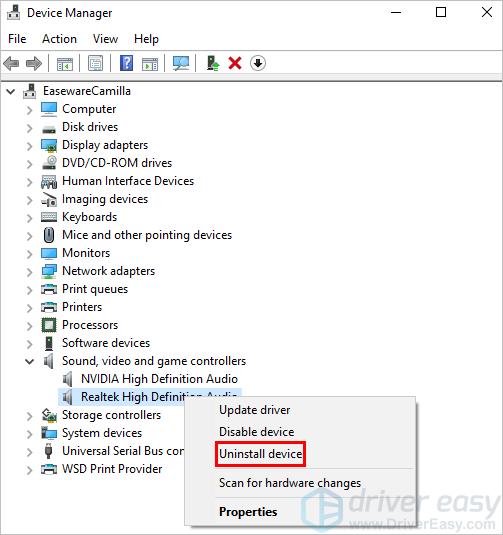
In Device Manager, expand DVD/CD-ROM drives, right-click the CD and DVD devices, and then select Uninstall.
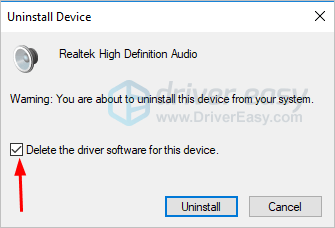
When you are prompted to confirm that you want to remove the device, select OK.
Restart the computer.
After the computer restarts, the drivers will be automatically installed.
If your problem is not solved, try the next method.
Method 4: Remove and reinstall IDE/ATAPI drivers
To remove and reinstall IDE/ATAPI driver, follow these steps:
From Start, search for Device Manager. Open Device Manager from the search results, and select the View menu. Choose Show Hidden Devices.
Expand IDE/ATAPI Controllers, and then:
Select and right-click ATA Channel 0, and then click Uninstall
Select and right-click ATA Channel 1, and then click Uninstall
Select and right-click Standard Dual Channel PCI IDE Controller, and then click Uninstall
If there are additional entries, right-click them and then choose Uninstall
Reboot the device.
After the computer restarts, the drivers will be automatically installed.
If your problem is not solved, try the next method.
Method 5: Fix corrupted registry entries
This problem may be caused by two Windows registry entries that have become corrupted. To use Registry Editor to delete the corrupted Registry entries, follow these steps:
Press the Windows logo key + R to open the Run dialog box.
Type regedit in the Run dialog box, then press Enter. If you are prompted for an administrator password or for a confirmation, type the password, or select Allow
In the navigation pane, locate and then select the following registry subkey:
HKEY_LOCAL_MACHINESYSTEMCurrentControlSetControlClass{4D36E965-E325-11CE-BFC1-08002BE10318}
In the right pane, select UpperFilters.
Note You may also see an UpperFilters.bak registry entry. You do not have to remove that entry. Click UpperFilters only. If you do not see the UpperFilters registry entry, you still might have to remove the LowerFilters registry entry. To do this, go to step 7.On the Edit menu, select Delete.
When you are prompted to confirm the deletion, select Yes.
In the right pane, select LowerFilters.
Note If you do not see the LowerFilters registry entry, go to the next method.On the Edit menu, select Delete.
When you are prompted to confirm the deletion, select Yes.
Exit Registry Editor.
Restart the computer.

Note: To use this method, you must be logged on to Windows as an administrator. To verify that you are signed in as an administrator, bring up the Control Panel, select User Accounts, and then choose Manage User Accounts.
Important:
Follow the steps in this section carefully. Serious problems might occur if you modify the registry incorrectly. Before you modify it, back up the registry for restoration in case problems occur.
After trying this method, some apps, such as CD or DVD recording software, might not work correctly. If so, try uninstalling and reinstalling the affected app. Check with the creator of the app to see if there is an updated version.
If your problem is not solved, try the next method.
Method 6: Create a registry subkey
To create the registry subkey, follow these steps:
Press the Windows logo key + R to open the Run box.
Type regedit in the Run box, then press Enter. If you are prompted for an administrator password or for a confirmation, type the password, or select Allow.
In the navigation pane, locate the following registry subkey:
HKEY_LOCAL_MACHINESYSTEMCurrentControlSetServicesatapi
Right-click atapi, point to New, then select Key.
Type Controller0, and then press Enter.
Right-click Controller0, point to New, and then select DWORD(32-bit) Value .
Type EnumDevice1, and then press Enter.
Right-click EnumDevice1, select Modify....
Type 1 in the Value data box, and then select OK.
Exit Registry Editor.
Restart the computer.
Notes
To use this method, you must be logged on to Windows as an administrator. To verify that you are signed in as an administrator, bring up the Control Panel, select User Accounts, and then choose Manage User Accounts.
This method should be used on Windows 7, Windows 8 or 8.1, or Windows 10 version 1507. The issues fixed by this method shouldn’t occur in Windows 10 1511 or later.
Important: Follow the steps in this method carefully. Serious problems might occur if you modify the registry incorrectly. Before you modify it, back up the registry for restoration in case problems occur.
To access the Data Sources and Drivers dialog (Shift+Enter), perform one of the following actions:
In the Database tool window (View | Tool Windows | Database), click the Data Source Properties button .
In the Database tool window (View | Tool Windows | Database), click the Add button and navigate to Data Source | <data_source_vendor>.
Overview
In the Data Sources and Drivers dialog, you can manage your data sources and database drivers.
A driver is a collection that includes database driver files and default settings for creating a data source.
Data sources and drivers
When you select an item from the list of data sources and drivers, settings of the item appear in the right-hand part of the dialog.
Toolbar
| Item | Shortcut | Description |
|---|---|---|
| Alt+Insert | Create a data source or a driver. Android SQLite to create a data source for an SQLite database located on an Android device or emulator. An Android application module and Android SDK is required and must be defined in IntelliJ IDEA. See Android SQLite data source settings. | |
| Delete | Remove the selected item or items from the list. | |
| Ctrl+D | Create a copy of the selected data source or driver. | |
| Ctrl+B | Navigate to the driver settings that are associated with the selected data source. | |
| Move the selected data source to the global or project level. For more information about global and project levels, see Manage data sources. |
Context menu
| Item | Shortcut | Description |
|---|---|---|
| Add | Alt+Insert | Create a data source or a driver.
|
| Remove | Delete | Remove the selected item or items from the list. |
| Duplicate | Ctrl+D | Create a copy of the selected data source or driver. |
| Go to Driver | Ctrl+B | Navigate to the driver settings that are associated with the selected data source. |
| Make Global or Move to Project | Move the selected data source to the global or project level. For more information about global and project levels, see Manage data sources. | |
| Change Driver | Associate a data source with a driver. | |
| Reset Changes | Ctrl+Alt+Z | Revert changes for the selected item. |
| Load Sources | Load source code of database objects for the selected category of schemas. | |
| Show Driver Usages | Alt+F7 | Show data sources that use the selected driver. |
| Switch between recently-used items. |
Android SQLite data source settings
Specify the settings for the SQLite database located on an Android device or emulator.
| Item | Description |
|---|---|
| Name | Use this field to edit the name of the data source. |
| Device | Specify where the target database is located. This may be an Android device connected to your computer or a running Android device emulator. If [none] is the only option in the list, connect the device to your computer or start the emulator. Unless you do that, you won't be able to configure the data source. |
| Package name | Specify the name of the application package the target database is associated with. For more information about application packages Android documentation. Select a package name suggested by IntelliJ IDEA or type its ID. For the database to be accessible, the corresponding application must be built as debuggable and installed on the device or the emulator. IntelliJ IDEA run configurations, by default, build Android applications in the debug mode. Alternatively, you can generate the APK in the debug mode. |
| Storage | Select:
|
| Database | If the database is stored in the internal memory, specify the database name. One of the names suggested by IntelliJ IDEA may do. If the database is stored in the external memory, specify the database location relative to the memory root. This may be something like Android/data/<application_ID>/<database_name>. |
| Download | If the necessary SQLite driver files are missing, you can download them by clicking the Download link in the lower part of the dialog. |
Data source settings
Settings pane of a data source includes the following tabs: General, Options, SSH/SSL, Schemas, Advanced.
General
The General tab includes settings that you need to specify for a database connection.
The set of fields and controls on the tab depends on the option that is selected in the Connection type list.
| Item | Description |
|---|---|
| Connection type | A connection type that you want to use for the database connection.
|
| Driver | The driver from the Drivers list that you want to use for the connection. |
| File | The path to the database file. Use the Open icon () to select an existing database file. The Save icon () creates a copy of a database file and changes a path to the copy location. |
| Path | The path to the database file or folder. Use the Open icon () to select an existing database file or a folder. |
| Host | The hostname (domain name) or the IP address of the computer where the database is located. If the database is on your local computer, specify localhost or 127.0.0.1. If you are using SSH, the database host must be accessible by the specified domain name or IP address from the computer on which the SSH proxy runs. See SSH/SSL tab. |
| Port | The database port number. |
| Database | The name of the target database or schema. |
| User | The name of your database user account. |
| Password | The password for the database user. |
| Save | Save settings for the password field. You can select the following options for storing your password:
|
| Create database | Adds an argument to the URL to create a database. This option is available only in some database management systems (for example, in the Apache Derby (Embedded)). |
| URL | The URL that IntelliJ IDEA will use to connect to the database. The user interface for specifying the URL is different depending on which option is selected in the Connection type list. |
| Test Connection | Verifies that the database connection settings are correct and IntelliJ IDEA can communicate with the database. To copy the communication information, click the Copy to Clipboard icon . |
Options
The Options tab includes settings of the database connection.
The set of fields and controls on the tab depends on the option that is selected in the Connection type list.
| Item | Description |
|---|---|
| Read-only | Set the read-only status. Select the checkbox to protect the data source from accidental data modifications. If the checkbox is selected, you cannot modify the data in the Data editor. Data modifications might be possible in the query console if the driver does not support the read-only status. |
| Transaction control | Set the isolation level for database transactions and the mode of how the transactions are committed.
|
| Switch schema | Define a mode that IntelliJ IDEA uses to switch schemas.
|
| Single connection mode | Enable the single connection mode. Single connection mode means that the data source and all consoles use one and the same connection. This mode allows you to see the temporary objects in the database tree, or use the same transaction in different consoles. For more information about consoles, read Query console. |
| Run keep-alive query each N seconds | Run a keep-alive query to keep the connection alive. You can define the custom query in the driver settings for unsupported databases. |
| Auto-disconnect after N seconds | Disconnect from the database after the specified number of seconds. |
| Single database mode | In the database tree view, show and enable only the database that you specified in the connection settings. When you connect to a data source, IntelliJ IDEA can retrieve and display you all the databases that the data source has. But in some cases (for example, with certain settings of PgBouncer), you can or are allowed to work only with a certain database. In the database tree view with the Single database mode enabled, you see only the database that you specified in the connection settings. Consider using this setting for PostgreSQL, Azure SQL Database, Greenplum, Amazon Redshift. |
| Startup script | Run an SQL query each time you establish a connection. Note: if the Single connection mode checkbox is cleared, each new query console creates a new connection. |
| Auto sync | Synchronize the actual state of the database automatically. The state of the database means the database tree view that you see in the Database tool window (View | Tool Windows | Database). If the Auto sync checkbox is selected, the view of the data source is automatically updated:
If the Auto sync checkbox is cleared, the view of the data source in the Database tool window is synchronized with the actual state of the database only when you click the Refresh button or press Ctrl+F5). |
| Load sources for | Load source code of views, procedures, packages and other database objects for the selected category of schemas: all schemas (All schemas), all schemas excluding system schemas (All excl. system schemas), or disable the feature (None). To change this setting for several data sources simultaneously, select the corresponding data sources. Right-click the selection and navigate to Load Sources and select an option. |
| Warn when editing an outdated DDL | Display a notification if the cached DDL differs from the actual DDL in the database. Every time you open source code, IntelliJ IDEA displays you a version that is loaded during the indexing process. But if someone changes the source code from another workstation, the indexed version becomes outdated. If your version is older than the one in the database, you see the following notification: |
| Introspect using JDBC metadata | Switch to the JDBC-based introspector. To retrieve information about database objects (DB metadata), IntelliJ IDEA uses the following introspectors:
Consider using the JDBC-based intorspector when the native introspector fails or is not available. The native introspector can fail, when your database server version is older than the minimum version supported by IntelliJ IDEA. You can try to switch to the JDBC-based introspector to fix problems with retrieving the database structure information from your database. For example, when the schemas that exist in your database or database objects below the schema level are not shown in the Database tool window. |
| Use pre-introspected objects for system catalogs that are not introspected | Toggles the usage of pre-introspected objects for system catalogs. For more information about introspection and system catalogs, see Pre-introspected objects from system catalogs. |
| External model data | Defines a path to external-data.xml that stores relations of virtual foreign keys. These relations are used in the auto-completion list, data navigation, and diagrams. For more information about virtual foreign keys, see Foreign keys. |
| Code style | Select a code style that you want to use for schemas. For more information about code style customization, read Code styles for SQL. |
SSH/SSL
The SSH/SSL tab includes settings for the SSH or SSL connection.
SSH
| Item | Description |
|---|---|
| Use SSH tunnel | Select this checkbox to enable connecting via SSH. Then choose one of the created SSH configurations, or click and create a new configuration as described in Create SSH configurations. |
SSL
| Item | Description |
|---|---|
| Use SSL tunnel | Enable settings for configuring the SSL connection. |
| Copy from | Copy SSH settings from the existing data source. Click the link and select the corresponding data source. |
| CA file | Specify the path to the SSL Certificate Authority (CA) certificate file. The certificate file must be the same certificate as used by the server. |
| Client certificate file | Specify the path to your (client) public key certificate file. |
| Client key file | Specify the path to your (client) private key file. |
Schemas
Dialogue Input Devices Driver Download Windows 7
Select the databases and schemas to be shown in the Database tool window.
| Item | Description |
|---|---|
| Refresh the list of the databases and schemas. | |
| Expand all nodes in all trees. | |
| Collapse all nodes in all trees. | |
| Filter the contents in trees. Only the databases and schemas whose names contain the specified text are shown. | |
| Pattern | Define a pattern to select the necessary databases and schemas. To get the info about the syntax to be used, position the caret into the field and press Ctrl+Q.
Consider the following examples:
|
| Object filter | Limit the set of tables and other database objects that are shown in the Database tool window for each data source. For example, if you limit the resolve scope to All other tables will be out of the scope. IntelliJ IDEA does not resolve objects that are not displayed in the Database tool window. Use the following pattern when you compose an expression for the Object filter field.
|
Advanced
The Advanced tab includes the database connection properties, options and environment variables for the JVM database driver.
The table on the Advanced tab displays a set of connection options that are passed to the database driver as key and value pairs.
When you select a cell in the Name column, the description of the corresponding option is shown underneath the table.
To add a row, start editing the values in the last row, where <user defined> and <value> are shown. A new row is added to the table automatically.
| Item | Description |
|---|---|
| VM options | JVM options for the database driver. For certain Oracle Database versions (for example, Oracle version 9), there might be connection problems when you and your database server are in different time zones. You can specify the time offset for your timezone in the VM Option field (for example, |
| VM environment | Environment variables for the database driver JVM. For example, encoding-related issues in Oracle database can be solved by setting the |
| Working directory | The working directory for the process that handles working with data sources. Also, all relative paths are resolved relatively to this directory (for example, paths in driver properties). For example, if you create a file-based database like SQLite and do not set the path for the SQLITE file, the file will be created in this working directory. |
For additional information, refer to your DBMS documentation.
DDL data source settings
A DDL data source is defined by its name and can reference one or more DDL files and another data source (a parent data source).
| Item | Description |
|---|---|
| Name | The data source name. |
| DDL Files | List of files that contain the necessary DDL definitions.
|
| Extend | Optionally, you can select another data source as a parent in the Extend list. As a result, the data source that you are editing inherits all DDL definitions from its parent. If you do not want to use the parent data source, select <none>. |
Driver settings
Settings pane of a driver includes the following tabs: General, Options, Advanced.
Settings
The General tab includes settings for driver files, URL templates, and driver classes.
| Item | Description |
|---|---|
| Class | The fully qualified name of the driver class to be used. |
| JDBC drivers | IntelliJ IDEA uses JDBC drivers to interact with a database. You can download and use a driver from the IntelliJ IDEA driver repository or specify the driver that you store on your computer. To download and use the latest driver version, click the Download ver. N link. You can also specify and use a driver with a particular version number. Click the ver. <version_number> link and select the driver version that you want to use. The selected version is downloaded and applied automatically. You can use the driver that is already available on your computer. In that case, click the Add button and select the driver files (with the JAR extension). |
| URL templates | The templates used to construct the database URL. The text in curly brackets represents variables. Consider the following examples:
Optional fragments are in square brackets, for example, Template names correspond to the names of the options in the URL options list. |
Options
| Item | Description |
|---|---|
| Transaction control | Set the isolation level for database transactions and the mode of how the transactions are committed.
|
| Switch schema | Define a mode that IntelliJ IDEA uses to switch schemas.
|
| Startup script | An SQL query that will run each time you establish a connection. Note: if the Single connection mode checkbox is cleared, each new query console creates a new connection. |
| Keep-alive query | A keep-alive query that will run to keep the connection alive. |
| Auto sync | The default setting for the auto sync option. |
| Load sources for | Load source code of database objects for the selected category of schemas. |
| Send application info | When connecting to a database server, IntelliJ IDEA sends the info about itself if this checkbox is selected. |
| Dialect | The SQL dialect associated with the corresponding data sources. |
| Code style | Selects a code style that you want to use for the data sources that use this driver. For more information about code style customization, read Code styles for SQL. |
| Format synced sources | Apply the code style to source code of database objects after synchronization. |
Advanced
The Advanced tab includes JVM options, environment variables, and options that can be passed to the database driver as key-value pairs.
Dialogue Input Devices Driver Downloads
To start editing a value in the table, double-click the corresponding Value field.
To add a row, start editing the values in the last row, where <user defined> and <value> are shown. A new row will be added to the table automatically.
Dialogue Input Devices Driver Download Windows 10
| Item | Description |
|---|---|
| VM Options | The default options for the JVM in which the database driver runs. The driver is started as a separate process in the JVM. |
| VM environment | Environment variables for the database driver JVM. For example, encoding-related issues in Oracle database can be solved by setting the |
Dialogue Input Devices Driver Download Win 7
Problems
Dialogue Input Devices Driver Download
If potential problems are detected, there is a number to the right of Problems. In that case, if you click Problems, you see the list of problems as well as controls for fixing them.