
- Hid Global USB Devices Driver
- Hid Global Usb Devices Driver Windows 7
- Hid Global Usb Devices Driver Updater
- The package provides the installation files for Microsoft USB Input Device Driver version 10.0.4. If the driver is already installed on your system, updating (overwrite-installing) may fix various issues, add new functions, or just upgrade to the available version.
- OMNIKEY 5x21 is a Smart Card Reader device. This Windows driver was developed by HID Global. Ensure that the correct driver for OMNIKEY 4121, 5121, 5321, 5125, 5325, 6321 is downloaded (V1.2.26.140 - Release: 2014-05-12).
- It doesn't need to have two USB Input HID Driver, only one would work fine. To check for possible cause of the issue, we suggest that you run Hardware and Devices troubleshooter. To do so, follow the steps below: Press Windows key. Type Troubleshooting. Click Hardware and Sound. Click Hardware and Devices. Follow the on-screen instructions.
ASSA ABLOY - HID Global 6837. ADVANCED NETWORK DEVICES 21. Professional AV 11. GeoVision USB Driver for 32bit Windows XP, Windows Vista, Windows 7,. HID® OMNIKEY® USB CDC EEM DRIVER. Hidglobalusbcdceemdriverv2.51.0.0.zip - (748.93 KB) HID USB CDC EEM Ethernet Adapter Download Direct Link.
Info:
Model: HID Global OMNIKEY Card Reader DriversVendor: HID Global Corporation
Version: 1.2.29.156, v.1.2.24.27, v.1.2.20.0, v.1.2.6.5
Operating system: Windows XP, Windows Vista, Windows 7, Windows 8, Windows 8.1, Windows 10
Bits: 32-bit (x86), 64-bit (x64)

Driver Date: 2017-05-25
Size: 3.8 mb
Driver description
Download driver HID Global OMNIKEY Card Reader Drivers version 1.2.29.156, v.1.2.24.27, v.1.2.20.0, v.1.2.6.5 for Windows XP, Windows Vista, Windows 7, Windows 8, Windows 8.1, Windows 10 32-bit (x86), 64-bit (x64).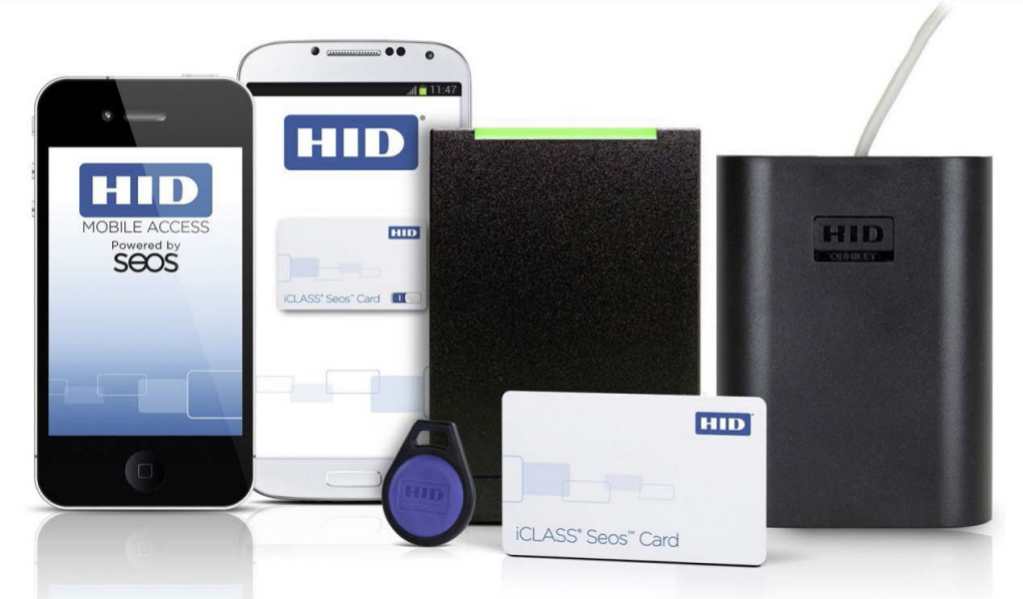
Screenshot of files
Installation screenshots HID Global OMNIKEY Card Reader Drivers
File Name
hid_global_xchip_driver_1.2.29.156.zip - Windows XP/Vista/7/8/8.1/10 32-64 bits (1.5 mb) v.1.2.29.156 - 25.05.2017
hid_omnikey3x2x_x86_w7_r1_2_24_27.zip - Windows XP/Vista/7 32 bits (3.8 mb) v.1.2.24.27 - 20.03.2014
hid_omnikey3x2x_x64_w7_r1_2_24_27.zip - Windows XP/Vista/7 64 bits (4.1 mb) v.1.2.24.27 - 20.03.2014
hid_omnikey3x2x_x64_r1_2_20_0.exe - Windows XP/Vista/7 64 bits (2.8 mb) v.1.2.20.0 - 08.08.2013
hid_omnikey3x2x_x86_r1_2_20_0.exe - Windows XP/Vista/7 32 bits (2.7 mb) v.1.2.20.0 - 08.08.2013
hid_omnikey3x2x_x64_w8_r1_2_24_27.zip - Windows 8 64 bits (4 mb) v.1.2.24.27 - 20.03.2014
hid_omnikey3x2x_w8_x64_r1_2_20_0.exe - Windows 8 64 bits (4 mb) v.1.2.20.0 - 08.08.2013
hid_omnikey3x2x_x86_w8_r1_2_24_27.zip - Windows 8 32 bits (3.8 mb) v.1.2.24.27 - 20.03.2014
hid_omnikey3x2x_w8_x86_r1_2_20_0.exe - Windows 8 32 bits (2.7 mb) v.1.2.20.0 - 08.08.2013
omnikey3x21_w8_only_x86_r1_2_24_27.exe - manual install, Windows 8/8.1 32 bits (0.2 mb) v.1.2.24.27 - 20.03.2014
omnikey3x21_w8_only_x64_r1_2_24_27.exe - manual install, Windows 8/8.1 64 bits (0.3 mb) v.1.2.24.27 - 20.03.2014
bu_win10_32_release_20140320_1.2.24.27.exe - manual install, Windows 10 32 bits (0.3 mb) v.1.2.24.27 - 20.03.2014
bu_win10_64_release_20140320_1.2.24.27_0.exe - manual install, Windows 10 64 bits (0.3 mb) v.1.2.24.27 - 20.03.2014
drv_hid_global_1.2.6.5.zip - manual install, Windows XP/Vista/7 32 bits (0.1 mb) v.1.2.6.5 - 06.09.2011
Human Interface Devices (HID) is a device class definition to replace PS/2-style connectors with a generic USB driver to support HID devices such as keyboards, mice, game controllers, etc. Prior to HID, devices could only utilize strictly-defined protocols for mice and keyboards. Hardware innovation required either overloading data in an existing protocol or creating non-standard hardware with its own specialized driver. HID provided support for these “boot mode” devices while adding support for hardware innovation through extensible, standardized and easily-programmable interfaces.
HID devices today include a broad range of devices such as alphanumeric displays, bar code readers, volume controls on speakers/headsets, auxiliary displays, sensors and many others. Many hardware vendors also use HID for their proprietary devices.
HID began with USB but was designed to be bus-agnostic. It was designed for low latency, low bandwidth devices but with flexibility to specify the rate in the underlying transport. The specification for HID over USB was ratified by the USB-IF in 1996 and support over additional transports followed soon after. Details on currently supported transports can be found in HID Transports Supported in Windows. 3rd-party, vendor-specific transports are also allowed via custom transport drivers.
HID Concepts
HID consists of two fundamental concepts, a Report Descriptor, and Reports. Reports are the actual data that is exchanged between a device and a software client. The Report Descriptor describes the format and meaning the data that the device supports.
Reports
Applications and HID devices exchange data through Reports. There are three Report types: Input Reports, Output Reports, and Feature Reports.
| Report Type | Description |
|---|---|
| Input Report | Data sent from the HID device to the application, typically when the state of a control changes. |
| Output Report | Data sent from the application to the HID device, for example to the LEDs on a keyboard. |
| Feature Report | Data that can be manually read and/or written, and are typically related to configuration information. |

Hid Global USB Devices Driver
Each Top Level Collection defined in a Report Descriptor can contain zero (0) or more reports of each type.
Usage Tables
Hid Global Usb Devices Driver Windows 7
The USB-IF working group publishes HID Usage Tables that are part of the Report Descriptors that describe what HID devices are allowed to do. These HID Usage Tables contain a list with descriptions of Usages, which describe the intended meaning and use of a particular item described in the Report Descriptor. For example, a Usage is defined for the left button of a mouse. The Report Descriptor can define where in a Report an application can find the current state of the mouse’s left button. The Usage Tables are broken up into several name spaces, called Usage Pages. Each Usage Page describes a set of related Usages to help organize the document. The combination of a Usage Page and Usage define the Usage ID that uniquely identifies a specific Usage in the Usage Tables.
See also
Hid Global Usb Devices Driver Updater
USB-IF HID Specifications.